
Rhinoplasty in Korea Cost 2026: How Much Can You Save vs. the USA?
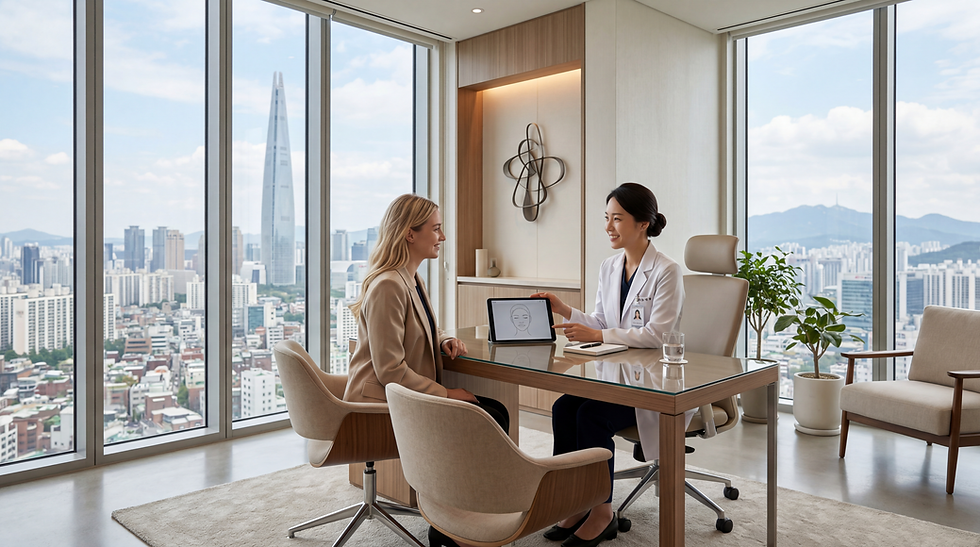
Korea has quietly become the world's most sought-after destination for rhinoplasty, and when patients start researching **rhinoplasty in Korea cost**, the numbers are eye-opening enough to stop anyone mid-scroll. The gap between what a nose job costs in Seoul versus New York, Los Angeles, or Toronto is not a rounding error — it is the kind of difference that makes international travel not just reasonable, but genuinely logical. Understanding **rhinoplasty in Korea cost** means looking beyond the sticker price to grasp what you actually get: world-class surgical skill, advanced techniques, and a seamlessly organized patient experience. In 2026, with Korea's medical visa expansion making the journey easier than ever, **rhinoplasty in Korea** has moved from a niche choice to a mainstream conversation happening on Reddit threads, in beauty communities, and across every corner of the internet where people talk honestly about plastic surgery.
What Rhinoplasty in Korea Actually Involves
Before diving into rhinoplasty in Korea cost comparisons, it helps to understand what you are actually paying for — because Korean rhinoplasty is not a one-size-fits-all procedure, and the clinical approach differs meaningfully from what most Western patients are used to.
Korean surgeons have developed a philosophy around rhinoplasty that blends aesthetic sensitivity with structural precision. Rather than simply adding or removing volume, Korean techniques tend to address the nose as an architectural element of the entire face. Surgeons consider the relationship between the nasal tip, bridge, and base in relation to the patient's brow line, jaw, and overall facial proportions. This holistic thinking is part of why Korean rhinoplasty results have earned global recognition — and it is a central reason the K-beauty movement has translated so powerfully into medical tourism demand.
The most common rhinoplasty procedures performed in Korea for international patients include augmentation rhinoplasty (raising a low bridge), tip refinement and projection, dorsal hump reduction, alar base reduction (narrowing the nostrils), and full structural revision rhinoplasty. Many patients combine two or three of these in a single surgical session, which is standard practice in Korean clinics and contributes to more efficient pricing overall.
Technically, Korean rhinoplasty surgeons are at the forefront of cartilage grafting techniques. Rather than relying heavily on silicone implants, many Korean surgeons harvest the patient's own rib cartilage or ear cartilage for augmentation, producing results that are more natural in texture, safer over the long term, and less prone to the shifting or visibility problems associated with implants. These autologous grafting methods have become the gold standard at leading Korean clinics and represent some of the most technically demanding work in facial plastic surgery.
Korea also operates under a rigorous national medical licensing framework. All plastic surgeons practicing legally must hold board certification, and the density of highly trained facial plastic surgeons in areas like Seoul's Gangnam district is unmatched anywhere in the world. Post-COVID medical tourism has brought increasing international scrutiny to Korean clinics, and the country's medical infrastructure has responded with greater transparency, multilingual care teams, and formalized aftercare protocols specifically designed for foreign patients.
Rhinoplasty Korea vs USA: What the Price Gap Really Looks Like
The conversation around rhinoplasty in Korea cost versus US pricing has moved well beyond anecdote. A now-famous Reddit thread on r/PlasticSurgery captured it perfectly — one user posted that a Seoul clinic quoted them a fraction of what surgeons in their home city had quoted, prompting over 2,100 upvotes and hundreds of replies from people sharing almost identical experiences. The sentiment is consistent: the gap is real, it is substantial, and it applies even after you factor in flights and accommodation.
In the United States and Canada, rhinoplasty pricing reflects a combination of factors that have little to do with surgical quality. Surgeon liability insurance in the US is extraordinarily expensive. Surgical facility fees, anesthesia billing, and pre-operative testing are each billed separately and can each rival the entire cost of a procedure in Korea. Administrative overhead at American clinics and hospitals is significant. And in major metropolitan markets — New York, Los Angeles, Miami, Toronto — the prestige premium on cosmetic surgery pricing can be substantial.
In Korea, the pricing model is more integrated. A quoted price typically encompasses the surgeon's fee, facility use, anesthesia, and standard aftercare visits. This bundled approach, combined with lower structural overhead and a highly competitive market among qualified providers, produces rhinoplasty in Korea cost figures that are significantly lower than equivalent procedures in the US or Canada — often dramatically so, even for complex structural cases.
When patients factor in the full picture — return flights from the US or Canada, accommodation in Seoul for the recommended two-week recovery period, meals, and local transport — the arithmetic still favors Korea by a considerable margin for most patients. Seoul's accommodation options span everything from budget guesthouses to medical tourism-specific recovery stays that include nursing check-ins and translation support. Flights from major US hubs to Seoul's Incheon Airport have become more competitive since Korea's 2026 medical visa expansion made long-stay medical visits administratively simpler, spurring more airline route investment on key corridors.
The Canada comparison follows a similar logic. Rhinoplasty wait times through Canadian public health are extremely long, and private cosmetic surgery pricing in Canadian cities mirrors the US premium. For Canadian patients, the total cost of a Korea rhinoplasty trip — surgery plus travel plus accommodation — frequently comes in well below what the same procedure would cost at home. For a personalised quote specific to your procedure goals, contact K-MedLinker directly.
How to Plan Your Rhinoplasty Trip to Korea: Logistics for US and Canadian Patients
Understanding rhinoplasty in Korea cost is only the beginning. The practical logistics of getting there, being cared for, and returning home safely are what separate a smooth, successful experience from an avoidable stressful one — and this is precisely where working with a certified medical agency like K-MedLinker makes a tangible difference.
Getting there.
Incheon International Airport in Seoul is one of the best-connected airports in Asia, with direct flights from Los Angeles, New York, Vancouver, Toronto, and other major North American hubs. Flight times from the US West Coast run approximately ten to eleven hours; from the East Coast, expect fourteen to fifteen hours. Korea's 2026 medical visa expansion has introduced a dedicated medical tourism visa category that streamlines the entry process for patients traveling for registered medical procedures, including extended stay provisions that make a two-to-three-week recovery period administratively uncomplicated.
Timing and pre-operative preparation.
Most surgeons recommend arriving at least two to three days before your surgery date to allow for final consultations, pre-operative blood work, and adjustment to the time zone. K-MedLinker coordinates all of this scheduling on behalf of international patients, including translation at consultations and escort to appointments where needed.
Recovery in Seoul.
The standard recommendation for rhinoplasty patients is to remain in Seoul for ten to fourteen days post-surgery for splint removal, swelling assessment, and the first follow-up. Seoul is a highly functional city to recover in — comfortable, safe, with excellent food delivery culture and proximity to clinics. Many medical tourists use their recovery downtime to experience the city gently at their own pace once they are past the first few days of rest. K-MedLinker can recommend recovery accommodation suited to medical tourists.
Flying home.
Most surgeons clear rhinoplasty patients for long-haul flights approximately twelve to fourteen days after surgery, provided healing is progressing normally. Your K-MedLinker coordinator will help you plan your return timing around your surgeon's post-operative assessment.
Why Korea Leads the World in Rhinoplasty in 2026
The global reputation of rhinoplasty in Korea cost competitiveness is well established — but cost alone does not explain why patients from the US, Canada, Southeast Asia, the Middle East, and Europe are choosing Seoul as their destination in growing numbers. Korea's dominance in rhinoplasty comes from a convergence of factors that no other country currently matches.
First, volume produces mastery. Korean facial plastic surgeons, particularly those who specialize exclusively in rhinoplasty, perform case volumes that most Western surgeons do not approach over entire careers. This concentration of experience refines both technical skill and aesthetic judgment in ways that are difficult to replicate.
Second, Korea's beauty culture has created a domestic population that is highly sophisticated about cosmetic outcomes. Korean patients are discerning, well-informed, and vocal — which has pushed clinics toward continuous improvement and genuine accountability. The surgeons who thrive in this environment have been tested by an exceptionally demanding domestic market before they ever see an international patient.
Third, Korea has invested institutionally in medical tourism infrastructure in ways that directly benefit foreign patients. Government-backed certification programs, standardized complaint mechanisms, and the 2026 medical visa framework all reflect a national commitment to making Korea the world's premier medical tourism destination. The rise of K-beauty globally has given Korean clinics extraordinary international brand recognition, and the post-COVID rebound in medical travel has accelerated inbound patient numbers from Southeast Asia, the Middle East, and North America simultaneously.
For US and Canadian patients specifically, the combination of rhinoplasty in Korea cost savings, surgical excellence, and increasingly seamless logistics has moved Korea from an intriguing possibility to a first-choice consideration.
Frequently Asked Questions
Q. I'm based in California — is the quality of rhinoplasty in Korea actually comparable to what I'd get from a top LA surgeon?
Many patients who have researched both options extensively conclude that the quality available in Korea is not merely comparable but in some respects exceeds what is accessible at similar price points in the US. Korean rhinoplasty specialists who work with international patients typically have extremely high case volumes, subspecialty focus on the nose specifically, and deep familiarity with the range of anatomical variation they see across their diverse patient base. That said, outcomes always depend on the individual surgeon and on clear communication about your goals — which is exactly why K-MedLinker spends significant time matching patients with surgeons whose aesthetic sensibility and technical specialization align with what the patient is looking for. Visit www.k-medlinker.com to begin that conversation.
Q. I'm from the Philippines — is it easy to travel to Korea specifically for rhinoplasty?
Korea has become one of the most popular rhinoplasty destinations for patients from the Philippines, Indonesia, Malaysia, and across Southeast Asia, and the logistics have become considerably easier in 2026. The medical visa expansion introduced this year includes provisions specifically relevant to Southeast Asian medical tourists, and many Korean clinics have dedicated coordinators who speak Filipino or Indonesian. Flights from Manila or Jakarta to Incheon are short and affordable relative to traveling to Western countries for surgery. K-MedLinker works with patients from across Southeast Asia and can walk you through the visa process, travel timing, and what to expect from the full experience before you commit to anything.
Q. Will my insurance cover rhinoplasty in Korea?
In most cases, cosmetic rhinoplasty is not covered by insurance whether performed in the US, Canada, or internationally — insurance exclusions for elective cosmetic procedures are standard across North American plans. Functional rhinoplasty (performed to correct breathing problems or post-trauma deformity) may have partial coverage domestically, but coverage does not typically extend to procedures performed abroad. It is worth checking your specific policy. For cosmetic cases, the rhinoplasty in Korea cost savings relative to the US are significant enough that many patients find the out-of-pocket equation compelling even without insurance. K-MedLinker can provide a personalised quote to help you plan accurately — contact us at [www.k-medlinker.com](https://www.k-medlinker.com).
Q. How safe is rhinoplasty in Korea, and what does recovery actually look like?
Korea operates under national medical licensing standards that require all practicing plastic surgeons to hold board certification from the Korean Board of Plastic and Reconstructive Surgery. Accredited facilities must meet regulated standards for sterile environments, anesthesia practice, and emergency protocols. For international patients using a certified agency like K-MedLinker, there is an additional layer of vetting — K-MedLinker works only with clinics and surgeons whose credentials and patient outcomes records have been reviewed. Recovery from rhinoplasty typically involves swelling and bruising for the first one to two weeks, a nasal splint for approximately seven to ten days, and gradual refinement of the result over three to six months as residual swelling fully resolves. Most patients are comfortable appearing in public by two weeks post-surgery, though the final result takes time to settle.
Ready to Take the Next Step?
If you have been researching rhinoplasty in Korea cost and wondering whether the reality lives up to what you have read, the honest answer is that for most US and Canadian patients, it does — and then some. The savings are real, the surgical quality is genuine, and the experience of traveling to Seoul for a procedure that would cost a multiple of the price at home is one that thousands of North American patients navigate successfully every year. What makes the difference between a stressful experience and a great one is having the right support: someone who knows the clinics, speaks the language, manages the logistics, and advocates for your interests from first enquiry through final follow-up. That is what K-MedLinker exists to do. Understanding your specific rhinoplasty in Korea cost starts with a conversation — and that conversation is completely free.
Book your free English consultation with K-MedLinker — no commitment, no pressure.
VIsit K-medlinker


Comments